
How to Install an EV Charger at Home Safely
Installing an EV charger at home safely means checking your electrical panel, choosing the correct dedicated circuit, fitting suitable protective equipment, and having the installation tested by a qualified electrician. Most Level 2 chargers require a 240-volt circuit, and the panel must have enough capacity for continuous charging without overheating or nuisance trips.
What does an EV charger installation involve?
A home EV charger installation connects a wall-mounted charging unit to your property’s electrical system. Unlike a standard three-pin socket, a Level 2 charger normally uses a dedicated 240-volt circuit and can draw substantial current for several hours at a time.
The work usually includes:
- Reviewing your vehicle and charger specifications
- Inspecting the consumer unit or electrical panel
- Calculating available capacity and demand
- Installing a dedicated circuit, protective devices, and cabling
- Mounting, configuring, and testing the charger
A qualified electrician should complete the electrical work. DIY installation can create shock, fire, warranty, insurance, and compliance risks, particularly when the existing wiring or panel is not suitable.
Can my electrical panel handle an EV charger?
Your panel may be able to handle an EV charger, but the answer depends on its main service rating, existing loads, spare breaker space, wiring condition, and the charger’s maximum current. A panel with an unused breaker position is not automatically capable of supporting a new high-demand circuit.
An electrician should assess:
- Main service capacity: The property’s incoming supply must support the charger alongside heating, air conditioning, cooking appliances, water heating, and other large loads.
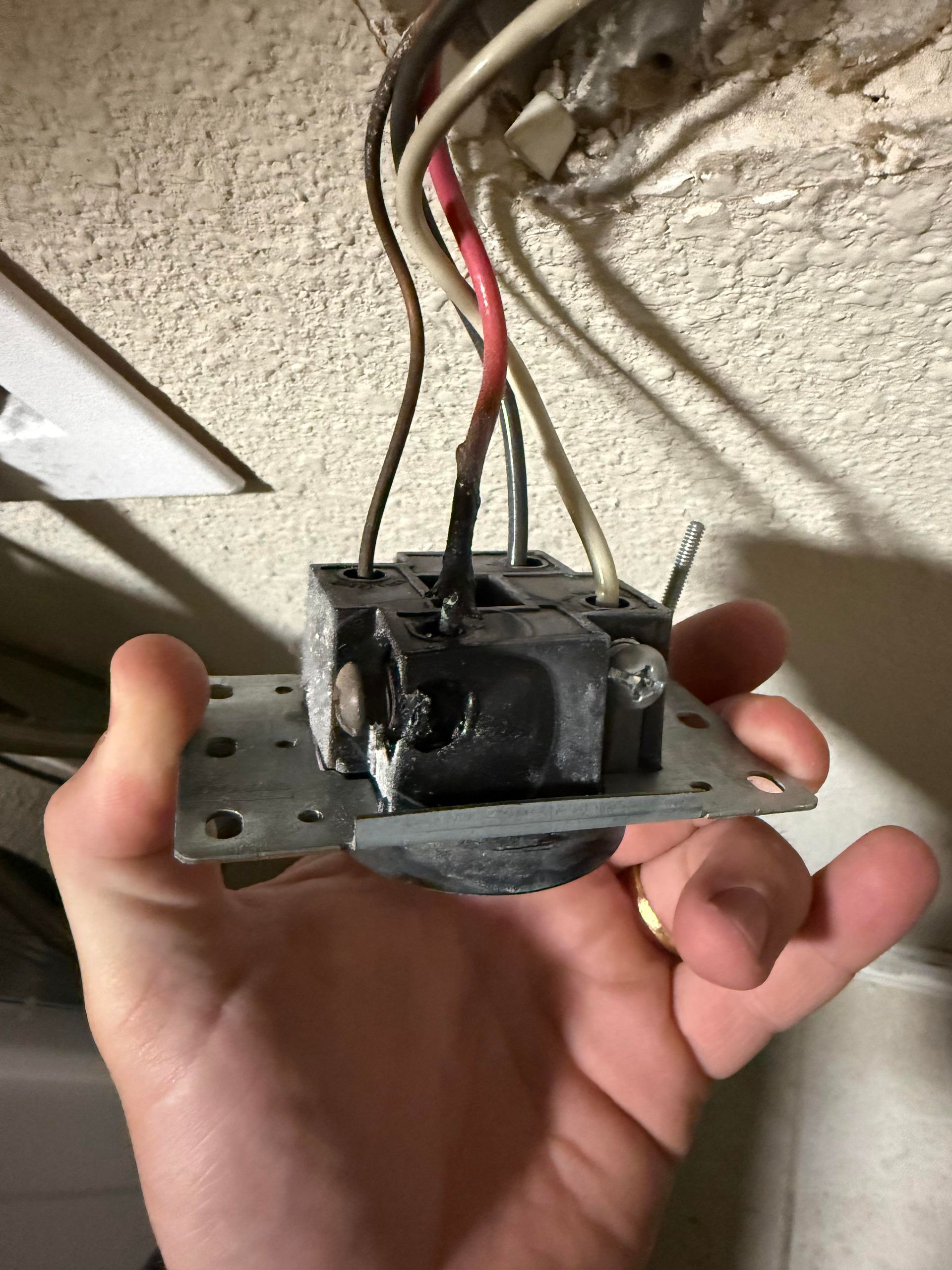
- Panel condition: Older, damaged, corroded, or overcrowded panels may need repair or replacement before installation.
- Available breaker space: The correct two-pole breaker and protective equipment must fit safely and be compatible with the panel.
- Existing demand: The calculation should consider realistic simultaneous use, not just the total of every appliance label.
- Cable route and distance: Longer runs may require larger conductors to control voltage drop and heat.
For related guidance, see Augie Electric’s electrical services or review the breaker wiring answers page.
What size circuit does a home EV charger need?
The required circuit depends on the charger’s output and the vehicle manufacturer’s specifications. Common home Level 2 chargers use 240 volts and may be configured for different current levels, such as 24, 32, 40, 48, or 60 amps.
EV charging is generally treated as a continuous load because the charger may operate for three hours or longer. As a result, the circuit and overcurrent protection must be sized according to applicable electrical requirements rather than simply matching the charger’s advertised output.
Do not select a breaker or cable based only on an online installation video. The electrician should confirm the manufacturer’s instructions, conductor type, termination requirements, ambient conditions, and local rules before work begins.
Where should an EV charger be installed?
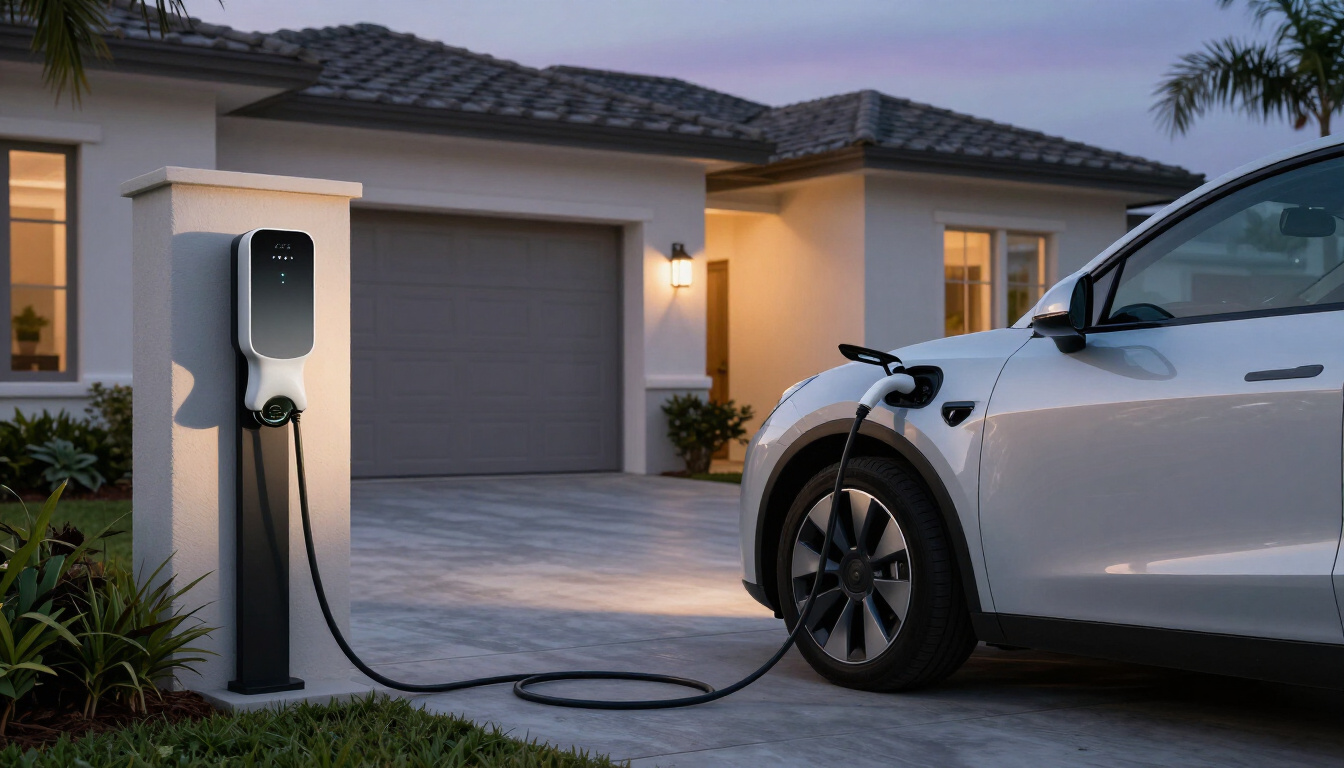
The best location balances convenient access, weather protection, cable reach, vehicle parking, and a safe route back to the panel. Chargers may be installed inside a garage, on an exterior wall, or on a suitable post, depending on the property and equipment rating.
Consider these practical points:
- Position the unit where the cable can reach the vehicle without crossing a walkway.
- Keep the charger away from areas vulnerable to impact, standing water, or flooding.
- Use equipment rated for the installation environment, especially outdoors.
- Protect exposed cable from vehicles, sharp edges, heat, and physical damage.
- Leave enough clearance to operate the controls and disconnect equipment safely.
An exterior charger should be installed with weather-resistant fittings and appropriate sealing. Coastal properties around St. Augustine and St. Augustine Beach may also need careful consideration of moisture and salt-air exposure.
Which safety devices does an EV charger require?
The exact protection depends on the charger, circuit design, and local requirements. Common considerations include overcurrent protection, ground-fault protection, correct earthing or grounding, and a suitable disconnecting method.
Many modern chargers include built-in protection, but that does not mean the installation can skip the required breaker or protective device. The electrician must verify what the charger provides and what the electrical installation requires.
Never use an extension lead, multi-plug adaptor, or shared household circuit as a permanent substitute for a properly installed EV charging circuit. These solutions can overheat and may not provide the protection or reliability that regular charging demands.
Permits, inspections, and commissioning
Local permitting and inspection requirements vary by location and project scope. Before installation, confirm whether a permit is required and whether the work must be inspected by the relevant authority or utility.
A professional commissioning check should confirm that:
- The charger is securely mounted.
- Terminals are tightened to the manufacturer’s specifications.
- Polarity, grounding, and protective devices are correct.
- The cable and breaker are appropriately sized.
- The charger communicates with the vehicle correctly.
- Charging stops correctly when protection is tested.
- The owner understands controls, load management, and emergency shut-off procedures.
Keep the installation paperwork, charger model information, test results, and permit records. These documents can help with future maintenance, warranty claims, insurance questions, or a later property sale.
When should you upgrade the electrical panel first?
A panel upgrade may be sensible when the existing service has limited capacity, lacks compatible breaker space, shows signs of damage, or already struggles with the home’s normal demand. An electrician may also recommend a service upgrade if the property has several high-load appliances or plans for future electrification.
A panel upgrade is not always necessary. In some homes, the better solution may be a lower-current charger, a managed load system, or a different charging schedule. The right choice should be based on a documented load assessment rather than a sales estimate.
If your panel is older or you are unsure of its condition, arrange an inspection before buying the charger. Augie Electric can help homeowners, landlords, and business owners in St. Augustine and St. Johns County evaluate the installation requirements.
How much does it cost to install an EV charger at home?
The price depends on the charger, circuit rating, cable distance, wall access, trenching, panel condition, permits, and whether an upgrade is needed. A short garage installation with a suitable panel is usually simpler than an outdoor installation requiring a long underground or concealed cable route.
Ask for an itemised quote that explains:
- Charger supply and configuration
- Breaker, cable, conduit, and protective equipment
- Labour and testing
- Permit or inspection charges
- Panel repairs or upgrades
- Trenching, wall repairs, or other site work
The cheapest quote may not represent the safest or most complete installation. Confirm that the proposal includes testing, labelling, commissioning, and clean-up—not only mounting the charger.
What should you do before booking an installation?
Prepare the charger make and model, vehicle details, photos of the electrical panel, approximate distance to the parking space, and information about major appliances. Do not remove the panel cover or attempt to test live equipment yourself.
Before work starts, ask the electrician:
- Has the property’s available electrical capacity been assessed?
- What circuit and protective equipment will be installed?
- Is a panel or service upgrade required?
- Are permits and inspections included?
- Is the charger suitable for the planned indoor or outdoor location?
- What testing and documentation will I receive?
You can schedule electrical service with Augie Electric for an assessment or installation consultation.
Key takeaways
Installing an EV charger at home safely starts with the electrical panel, not the charger purchase. A qualified electrician should calculate available capacity, select the correct dedicated circuit, install suitable protection, assess the cable route, and complete testing and commissioning. A panel upgrade may be required, but it is not automatic: load management or a lower-current charger may be viable alternatives. Before booking, gather your charger details, ask for an itemized quote, and confirm permit and inspection responsibilities. If you are uncertain about the panel or wiring, arrange an assessment before charging equipment is installed.






